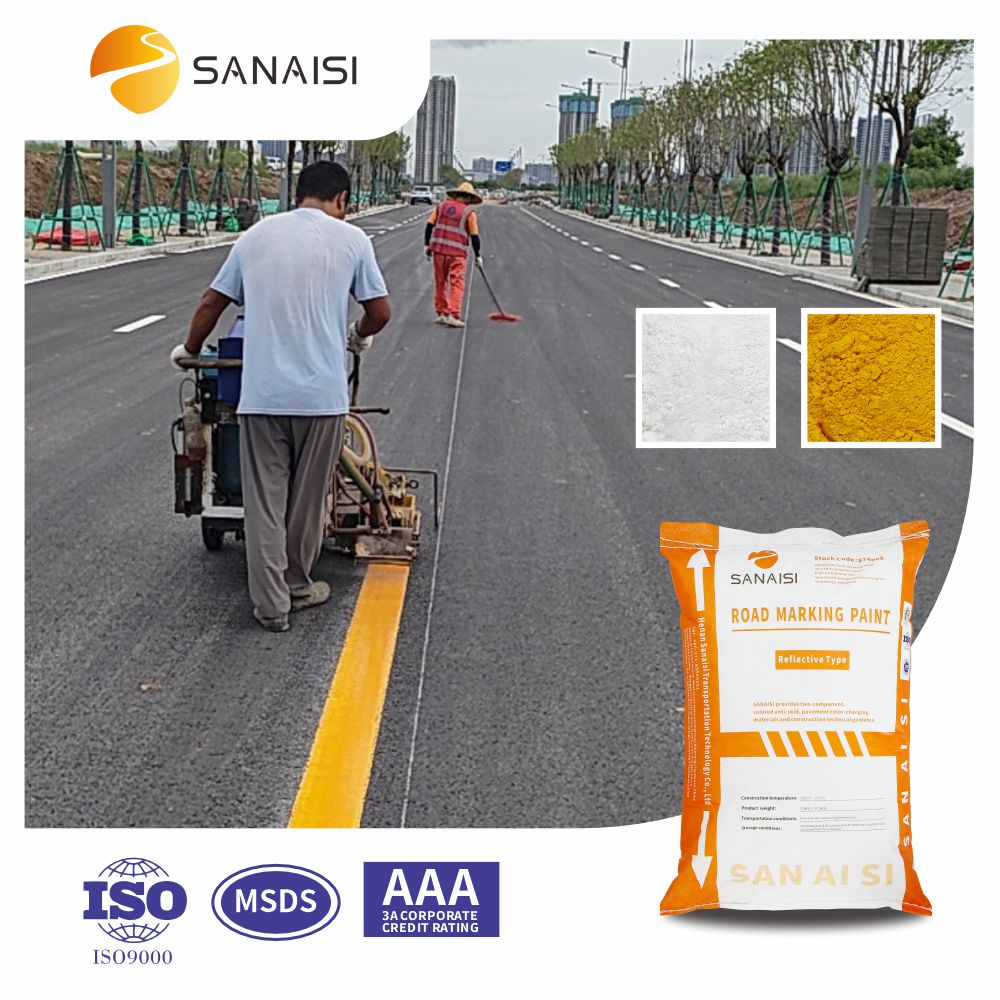
1.What Is Single Component Road Marking Paint?
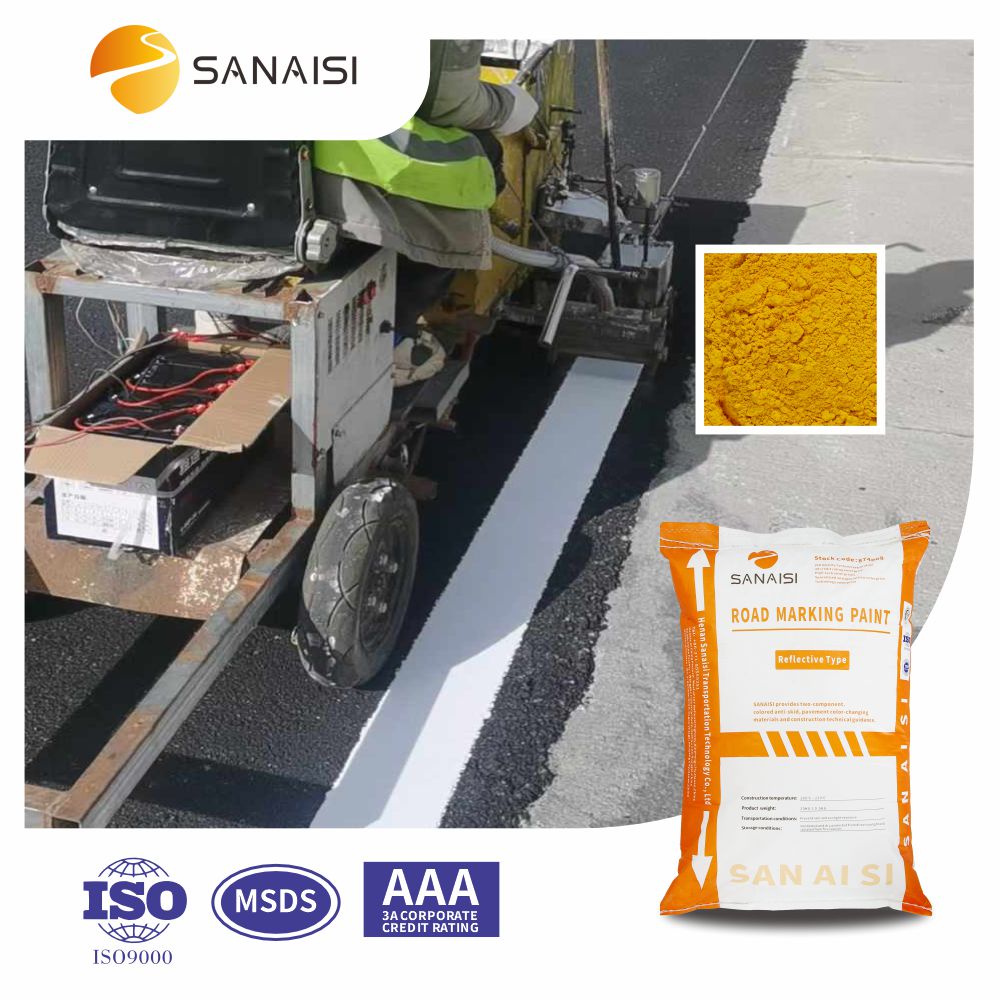
Single component road marking paint—often referred to as one-part road paint—is a ready-to-use coating that requires no mixing or catalyst addition before application. Unlike two-component systems that require precise blending of resin and hardener, single-component paint comes pre-formulated and can be applied directly from the container.
Key Characteristics:
| Property | Description |
| Composition | Alkyd resin, acrylic resin, or thermoplastic resin with pigments, fillers, and glass beads |
| Curing Mechanism | Solvent evaporation and oxidative cross-linking (air drying) |
| Application | Spray or extrusion application |
| Drying Time | 3-15 minutes to touch, 1-2 hours to traffic |
| Shelf Life | 12 months in sealed containers |
How It Works?
When applied to pavement, the solvent in the paint evaporates, leaving behind a solid film of resin, pigments, and reflective glass beads. The film continues to harden over the first 24-48 hours through oxidation, reaching its final durability and adhesion properties. This simplicity is exactly why single-component paints remain the most popular choice for routine road marking projects worldwide.
2.Single Component Road Marking Paint Core Applications
Single-component road marking paint excels across multiple application scenarios. Here's how it performs in key environments:
Volume: Medium to high traffic
Key Requirements: High reflectivity, good durability, quick drying
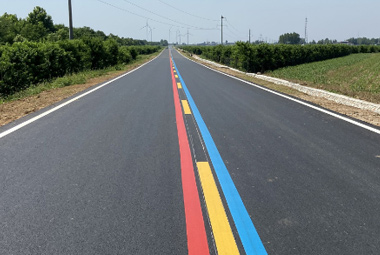
Single-Component Suitability: Good for lane lines, edge lines, and guide arrows
Our recommendation: Opt for high-solids formulations with 20-30% premix glass beads for highway applications. We've supplied paint for over 100+ highway projects spanning more than 5000 kilometers.
Volume: Low to medium traffic
Key Requirements: Cost-effectiveness, ease of application
Single-Component Suitability: Excellent
Parking lot operators value single-component paint for its affordability and ease of reapplication. Color contrast (white vs. yellow) remains sharp for 18-24 months with proper formulation.
Volume: High traffic (variable)
Key Requirements: Extreme durability, high skid resistance, strict compliance
Single-Component Suitability: Limited; thermoplastic or MMA typically preferred
However, single-component paints are still used for temporary or secondary taxiway markings at smaller airports. If you're maintaining general aviation facilities, single-component can be a cost-effective option.
Volume: Medium traffic
Key Requirements: Reflective properties, aesthetic quality, noise reduction
Single-Component Suitability: The most common choice worldwide
Major cities have used single-component road marking paint for decades. Its proven track record and ease of maintenance make it the default choice for public works departments.
Volume: Variable traffic
Key Requirements: Corrosion resistance, thin film
Single-Component Suitability: Good (solvent-based formulations preferred)
In bridge and tunnel applications, thin-film single-component paint offers superior corrosion protection for steel surfaces compared to thicker thermoplastic systems.
Volume: High internal traffic (forklifts, pallet jacks)
Key Requirements: Industrial durability, chemical resistance
Single-Component Suitability: Good; choose solvent-based formulations for oil/grease resistance
Many warehouse managers prefer single-component acrylic formulations for their balance of cost and performance under industrial conditions.
3.Single Component Road Marking Paint Performance
| Initial Reflectivity | >250 mcd/lux/m² |
| Retained Reflectivity (2 years) | >150 mcd/lux/m² |
| Drying Time (no pick-up) | ≤10 min |
| Wear Resistance (cycles) | >5,000 |
| Adhesion | >2.0 MPa |
4.Selection Guide
Before ordering, verify:
Ready to specify single-component road marking paint for your next project?