Your Position: Home > Products > Road maintenance
Cold Asphalt
Cold Asphalt
Cold Asphalt
Cold Asphalt

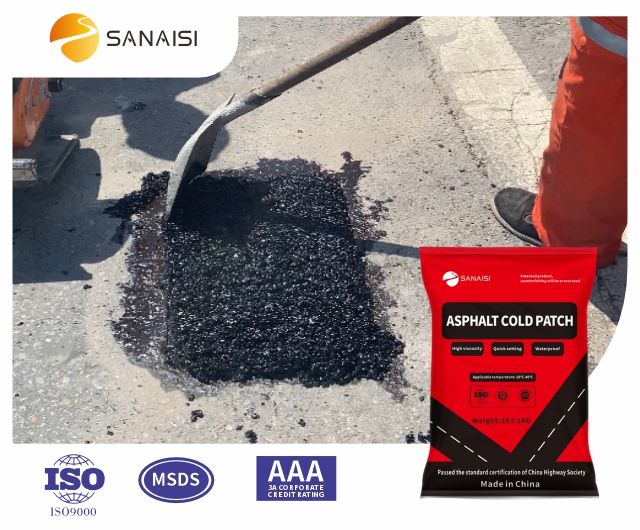
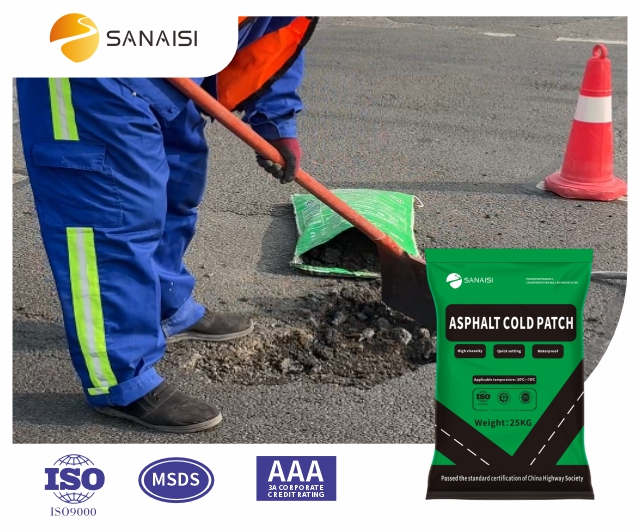
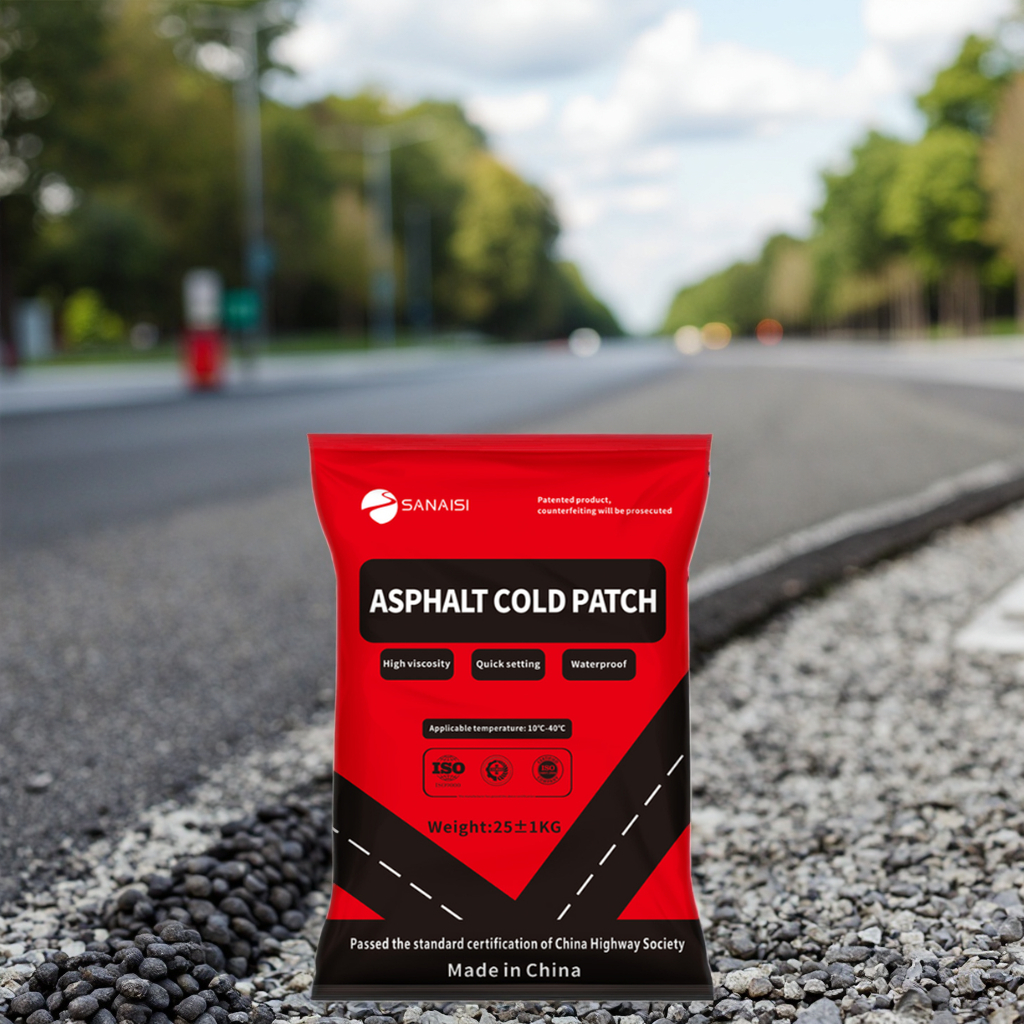
Asphalt Cold Patch for Fast and Durable Pothole Repair

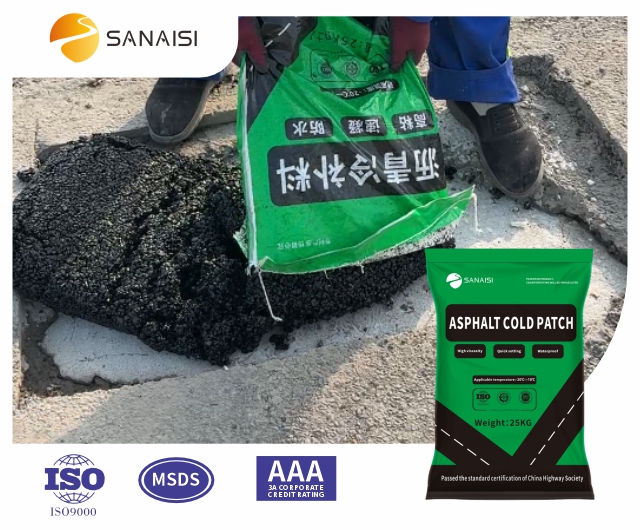
SANAISI Asphalt Cold Patch is a high-performance, ready-to-use asphalt repair material designed for fast, durable, and cost-effective pavement maintenance. It requires no heating or specialized equipment, allowing potholes and damaged asphalt surfaces to be repaired quickly while minimizing traffic disruption. Suitable for highways, municipal roads, parking lots, bridges, airports, and industrial areas, our cold patch material provides excellent adhesion, outstanding weather resistance, and long-lasting repair performance in both hot and cold climates.
Place of Origin: Henan, China
Brand Name: SANAISI
Raw materials: Base asphalt, asphalt modifiers, aggregates, and additives
Usage: Road repair,Pothole repair,Crack filling,Street edge repairs,
Overall operating temperature range: -20°C to 50°C
Introduction
Parameters
Features
Detail Display
Related
Faq
Inquiry
Introduction
Asphalt Cold Patch Introduce

Engineered for excellence, our advanced asphalt cold patch material is a polymer-modified, high-performance solution featuring:
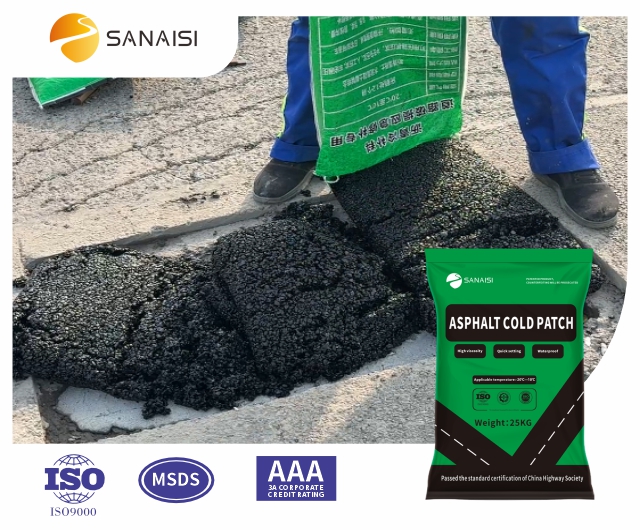

  • Superior viscoelastic properties with 150% higher adhesion than conventional mixes
  • Rapid curing system (traffic-ready in ≤60 mins @20°C)
  • All-weather applicability (-30°C to 50°C operational range)
  • Hydrophobic molecular structure achieving 99.2% waterproof efficiency
  • 5-8 years service life verified by accelerated pavement testing
Parameters
Cold Asphalt Describe
Traditional asphalt cold patch
Our High viscosity quick setting waterproof asphalt cold patch
1. Long curing cycle of the surface layer: rutting, bulging, cracks, etc. will appear after paving and opening to traffic due to the uncured surface layer, which seriously affects the service life of the cold patch material.
1. The surface layer solidifies quickly, and traffic is immediately opened after paving and compaction, which is not easy to produce rutting, bulging, and cracks.
2. Softening due to high temperature in summer: Traditional asphalt cold patch materials on the market use a physical change production method, which leads to a large amount of solvent inside that is difficult to volatilize. The solvent softening point is
extremely low. The high temperature in summer causes the cold patch material to soften and needs to be dug out and re-paved.
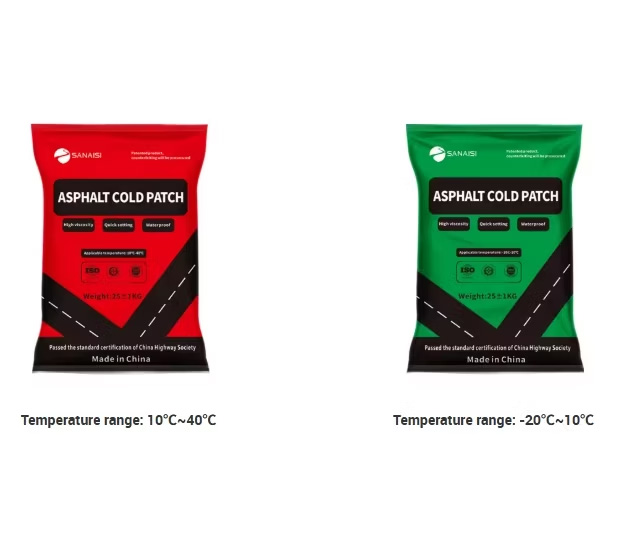
2. It adopts a unique chemical change method, which can be used at -20℃ to +40℃. It does not soften in summer and does not freeze and crack in winter. It also takes into account high and low temperature performance, solving the problem that cold patch materials need to be dug out and re-paved in summer.
3. Threshing problem after rain: Because the production process of the cold patch material itself uses a single grade, and contains a large amount of difficult-to-volatile solvents, its porosity and water permeability are too high. After heavy rain, rainwater penetrates into the interior, causing water isolation of the mixture. After repeated rolling by vehicles, dispersion and threshing occur.
3. Due to its unique plasticizing characteristics, after paving and compaction, it has strong resistance to water damage and is fully adapted to the rainy and humid climate in the south.
4. During the production process, the stone maintains a dryness of more than 85% (no water and no moisture visible to the naked eye), and can be cold mixed throughout the process without heating, saving fuel costs, environmental protection and low carbon.
Raw Materials
Advantages of cold patching asphalt


1. Suitable for all seasons: Can be applied within a temperature range of -20°C to 40°C, with no terrain restrictions.


2. Rapid curing: Cures quickly; traffic can resume immediately after laying and compaction.


3. High workability: Resistant to water damage and aging, with strong adhesion, making it ideal for humid and rainy weather.


4. Easy to use: No heating required; use as needed.


5. Long Service Life: Repaired potholes are resistant to loosening, spalling, and cracking.


6. Reduced Maintenance Costs: Consistent quality eliminates the need for repeated repairs.


7. Versatile Applications: Suitable for repairing and maintaining all types of road surfaces, such as municipal roads, highways, tunnel and mine roads, scenic areas, residential communities, and areas around manhole covers.


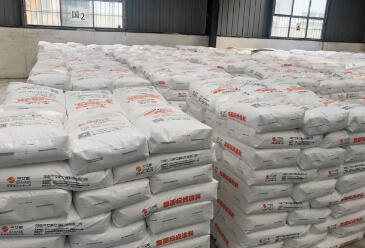
8. Easy Storage: Convenient to transport and can be stored at room temperature.

Detail Display
How to Apply Asphalt Cold Patch: Step-by-Step Guide?
SANAISI Asphalt Cold Patch is designed for fast, durable, and hassle-free road repairs. Ready to use straight from the bag, it requires no heating, no mixing, and no specialized equipment. By following the simple application steps below, contractors and maintenance teams can efficiently repair potholes and damaged asphalt surfaces while minimizing traffic disruption and reducing maintenance costs.
1. Grooving cleaning
Determine the excavation location of the pit, mill or cut around it, and clean up the gravel and slag in and around the pit. No mud, gravel or other debris should be left in the pit. The repaired pit should have neat cut edges, and the slag at the bottom of the pit should be removed until a solid surface is seen.
2. Apply interface edge sealant
Apply the interface edge sealer evenly around and on the bottom of the cleaned pit.
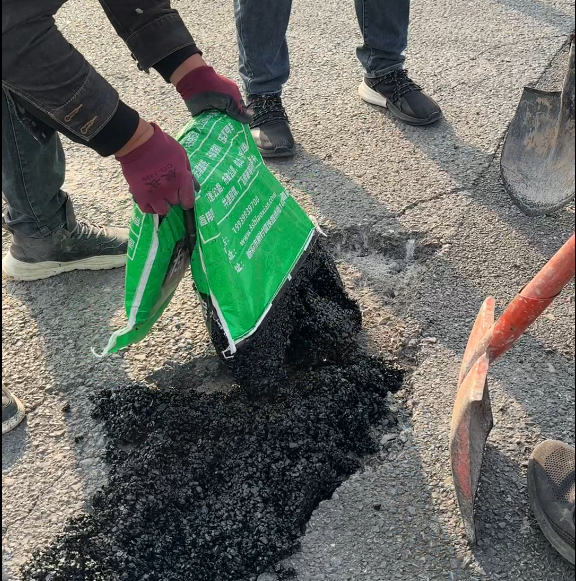
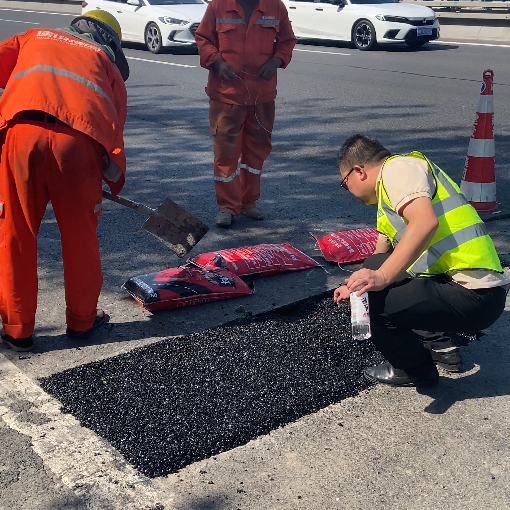
3. Fill the potholes
Fill the pothole with enough asphalt cold patch material. The filler should be about 1.5 cm higher than the road surface. After filling, the center of the pothole should be slightly higher than the surrounding road surface and in an arc shape. If the depth of the pothole is greater than 5 cm, it should be filled in layers and compacted layer by layer. The thickness of each layer should be 3 to 5 cm.
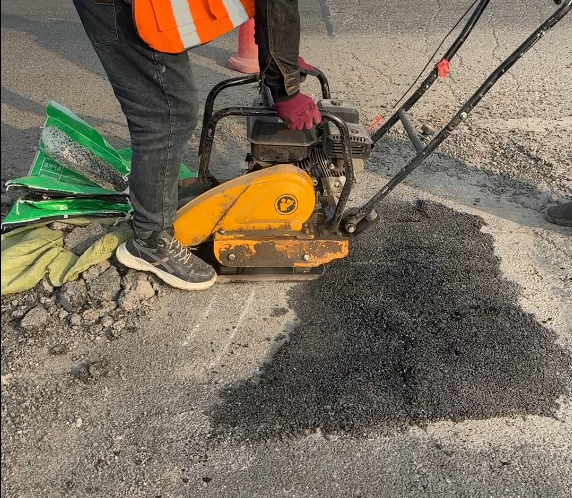
4. Paving and compaction
After paving evenly, choose appropriate tools and methods for compaction according to the size and depth of the pothole repair area, such as rollers, flat plate compactors, jumping compactors, natural rolling of car tires, etc. The repaired pothole surface should be smooth, flat, and free of wheel marks. The corners around the pothole must be compacted to ensure there are no loose areas. The road can be opened to traffic immediately.
Recommended products
Main Products
Packing
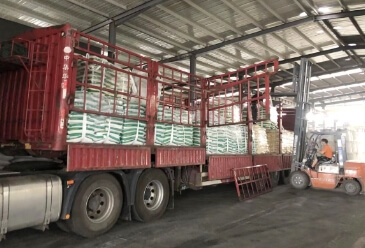
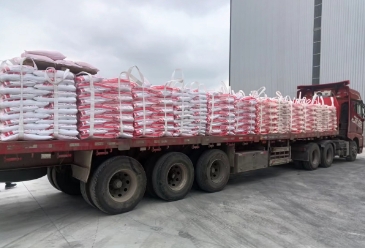
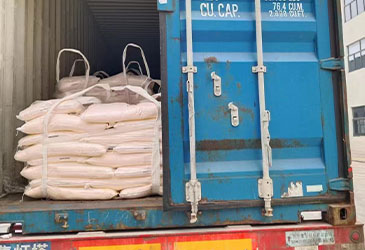
Packing&Shipping
Packing&Shipping
Packing&Shipping
Packing&Shipping
Packing&Shipping
Packing&Shipping
Packing&Shipping
Packing&Shipping
Packing&Shipping
ONLINE SERVICE
Your Satisfaction Is Our Successe
If you are looking for related products or have any other questions please feel free to contact us.
You can also give us a message below , we will be enthusiastic for your service.
Contact Us
X